Loading…
REFOLK WORKSHOP & SEPIA
21:00
Grato Passage39 Merab Kostava St, TbilisiMap (opens in a new tab)
- Face value
- 30 ₾ – 100 ₾
Before you buy
- Ages 16 and over only.
No fan has listed a ticket yet.
Leave your email and we'll let you know as soon as a ticket is listed. Every ticket sold here is covered by the Mertskhali Guarantee.
About the event
About the event
REFOLK WORKSHOP & SEPIA takes place on Thu 17 Dec. Venue: Grato Passage. Box-office prices from 30 ₾. Mertskhali is a ticket resale platform in Georgia: buy a ticket from another fan, or sell one you can no longer use.
Meet Stav Struz Boutrous
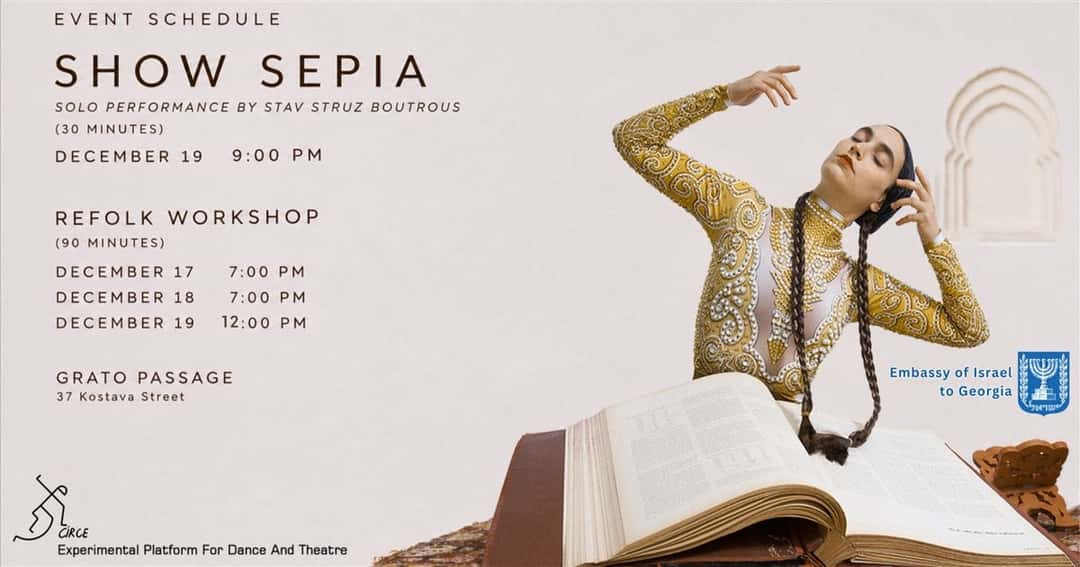
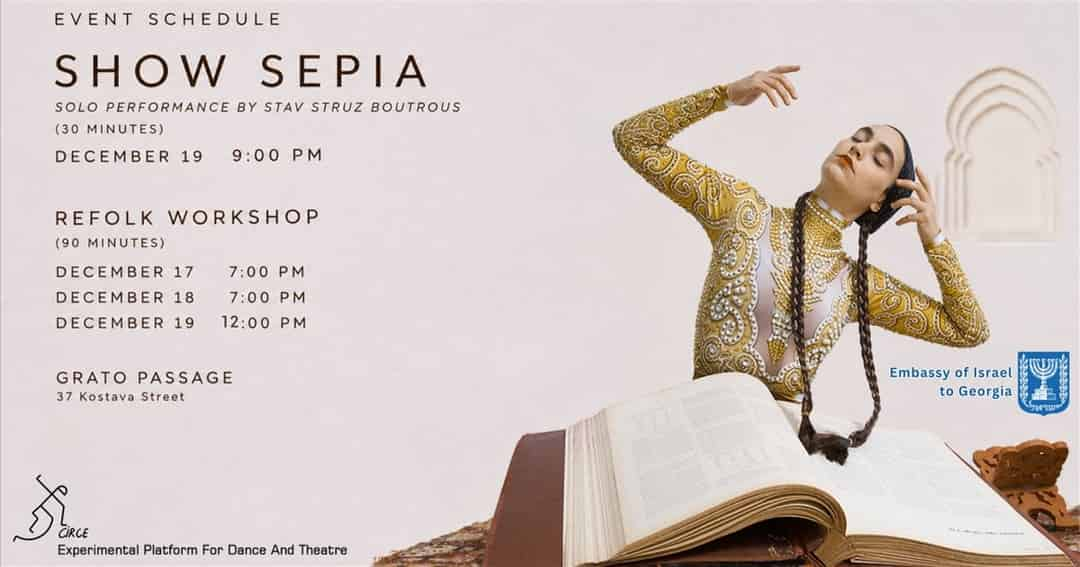
EVENT SCHEDULE
THURSDAY, DECEMBER 17, 2026
21:00 — REFOLK Workshop (90 minutes)
FRIDAY, DECEMBER 18, 2026
21:00 — REFOLK Workshop (90 minutes)
SATURDAY, DECEMBER 19, 2026
12:00 — REFOLK Workshop (90 minutes)
21:00 — SEPIA, solo performance by Stav Struz Boutrous (30 minutes)
REFOLK WORKSHOP
REFOLK is a workshop based on folklore movement materials from the Tbilisi region and other areas of the Caucasus, combined with the personal contemporary interpretation of choreographer and dancer Stav Struz Boutrous.
Stav's encounter with folklore began through research into her family's Georgian roots, opening a rich world of movement traditions, music, and costumes. Over the years, these materials have become an integral part of her artistic practice, in which she brings together folklore and the contemporary dance language from which she emerged.
It is important to emphasize that REFOLK is not a traditional Georgian dance class. Rather, the workshop explores how movement materials from different cultures can be processed and transformed through the body, creating a personal movement language that connects different traditions and uses them as tools and foundations for contemporary dance.
Much of the material taught in the workshop is based on Stav's ongoing studies with her Georgian teacher, Mariam Linderovna, who continues to train her in traditional Georgian dance and folklore materials from Tbilisi and other regions of Georgia.
Each workshop will focus on a different dance style or geographical region. Participants will explore original source materials, discover stories and traditions connected to the dances, and investigate how these materials can be transformed through the contemporary body.
The physical practice will include fast footwork, jumps, turns, coordination, changing rhythms, strength, and elegance.
Participants
Professional dancers and people with previous movement experience. Open to both women and men.
Recommended clothing
Black ballet shoes or black socks, black tights or long black trousers, a leotard or comfortable dance top, and knee pads. Women may also wear a black knee-length skirt.
SEPIA — SOLO PERFORMANCE
December 19, 2026 | 21:00
30 minutes
A solo performance by Stav Struz Boutrous.
Sepia is a feminine martial dance that offers an intimate gaze into the world of combat. The work focuses on Khorumi, a traditional Georgian war dance, and the stages of combat that inspired its choreographic structure: searching, invitation, combat, and victory.
Have a ticket for this event? Be the first to list it
Set your own price. The buyer pays Mertskhali before you send anything, and you get paid after the event.
Event details
Date, venue and face value
- 21:0030 ₾ – 100 ₾Face value